
INDEPENDENT LEARNING BUILDS CONFIDENCE
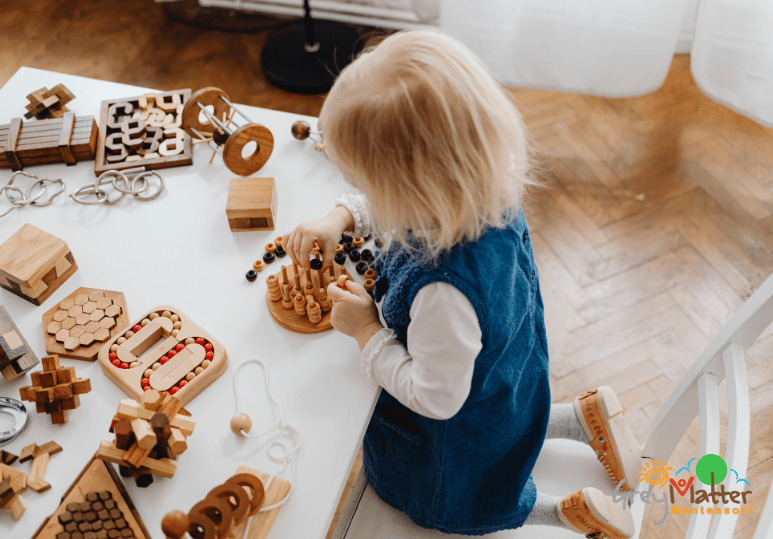
Montessori classrooms are designed to encourage children to complete activities independently while learning at a pace that matches their individual development. Giving children opportunities to make choices and solve problems on their own may help strengthen confidence and self-esteem over time.
Independent learning may help children develop:
- Decision-making skills
- Responsibility and accountability
- Concentration and focus
- Problem-solving abilities
- Self-motivation
- Confidence in learning new skills
Children are encouraged to select activities from carefully prepared classroom materials while educators provide guidance and support when needed. This balance of independence and structure allows children to feel capable while still receiving encouragement throughout the learning process.
Montessori learning environments are intentionally organized so children can access materials independently and complete tasks with minimal assistance. As children practice activities repeatedly, they often become more comfortable trying new challenges and exploring unfamiliar concepts.
Learning independently may also help children become more resilient when facing mistakes or obstacles. Montessori materials are often designed to allow children to recognize and correct errors on their own, encouraging patience and persistence during the learning process.
PRACTICAL ACTIVITIES FOR SELF-CONFIDENCE
Practical life activities are an important part of Montessori education and can play a major role in helping children build confidence during early childhood development. These activities teach children how to complete everyday tasks independently while strengthening coordination, focus, and responsibility.
Practical life activities may include:
- Cleaning and organizing
- Preparing snacks
- Pouring and transferring activities
- Washing hands independently
- Caring for classroom materials
- Tidying personal workspaces
Completing real-world tasks successfully may help children feel more capable and independent. Even small accomplishments can contribute to stronger self-confidence and encourage children to take pride in their abilities.
Montessori educators often demonstrate activities before allowing children to practice independently. This approach gives children a clear understanding of expectations while still allowing them to explore and learn through hands-on experiences.
Practical activities also encourage children to develop patience and perseverance. Repeating tasks over time may help children gain confidence as they improve skills and experience a sense of accomplishment.
These experiences can help children build confidence not only in the classroom but also during everyday activities at home and in social settings.
SUPPORTIVE CLASSROOMS ENCOURAGE GROWTH
Montessori classrooms are designed to create calm, respectful, and supportive learning environments where children feel comfortable exploring, asking questions, and trying new activities. Supportive classroom settings may help children develop emotional confidence while encouraging curiosity and active participation.
Montessori classrooms often support development through:
- Respectful communication
- Structured classroom routines
- Collaborative learning opportunities
- Mixed-age classroom interactions
- Self-directed learning periods
- Calm and organized environments
Mixed-age classrooms may also help children build confidence socially. Younger children can learn by observing older students, while older children often strengthen leadership and communication skills by helping classmates.
Montessori education focuses on supporting the whole child rather than concentrating only on academic performance. Social, emotional, physical, and cognitive development are all considered important parts of early learning.
Children who feel supported and encouraged during the learning process may become more comfortable expressing ideas, solving problems, and participating in classroom activities with greater confidence.
Families exploring Montessori programs often value learning environments that help children build confidence naturally through independence, hands-on learning, and supportive classroom experiences. Developing confidence during the early years may help children build stronger learning habits and positive self-esteem that continue throughout life.
FAQs
Q: HOW DOES MONTESSORI EDUCATION HELP BUILD CONFIDENCE?
A: Montessori education helps build confidence by encouraging children to complete tasks independently, make decisions, and learn at their own pace. Hands-on activities and self-directed learning experiences allow children to develop problem-solving abilities and feel more capable while exploring new skills.
Q: WHAT ARE PRACTICAL LIFE ACTIVITIES IN MONTESSORI CLASSROOMS?
A: Practical life activities are everyday tasks that help children develop independence and responsibility. These activities may include cleaning, organizing, preparing snacks, pouring water, and caring for classroom materials. Practical activities also support coordination, concentration, and confidence during early childhood development.
Q: WHY IS CONFIDENCE IMPORTANT DURING EARLY CHILDHOOD DEVELOPMENT?
A: Confidence may help children feel more comfortable trying new activities, solving problems, communicating with others, and participating in learning experiences. Building confidence during early childhood can support emotional development, independence, and stronger long-term learning habits.