MONTESSORI EDUCATION SUPPORTS INDIVIDUAL LEARNING STYLES
One of the main reasons many parents choose Montessori education is the individualized approach to learning. Every child develops differently, and Montessori classrooms are designed to support varying learning styles, interests, and developmental stages within the same environment.
Rather than requiring every child to learn at the same pace, Montessori education encourages children to progress through activities according to their readiness and abilities. This flexible structure may help children feel more comfortable, engaged, and confident while learning.
Montessori learning environments may help support:
- Independent thinking
- Problem-solving skills
- Confidence and self-esteem
- Focus and concentration
- Curiosity and creativity
- Long-term engagement with learning
Children are encouraged to choose activities from carefully prepared classroom materials while educators provide guidance and direction as needed. This approach allows children to become active participants in their learning experiences instead of relying entirely on teacher-led instruction.
Many parents appreciate that Montessori classrooms encourage children to build confidence naturally through exploration, repetition, and independent discovery.
HANDS-ON LEARNING FOR ACTIVE PARTICIPATION
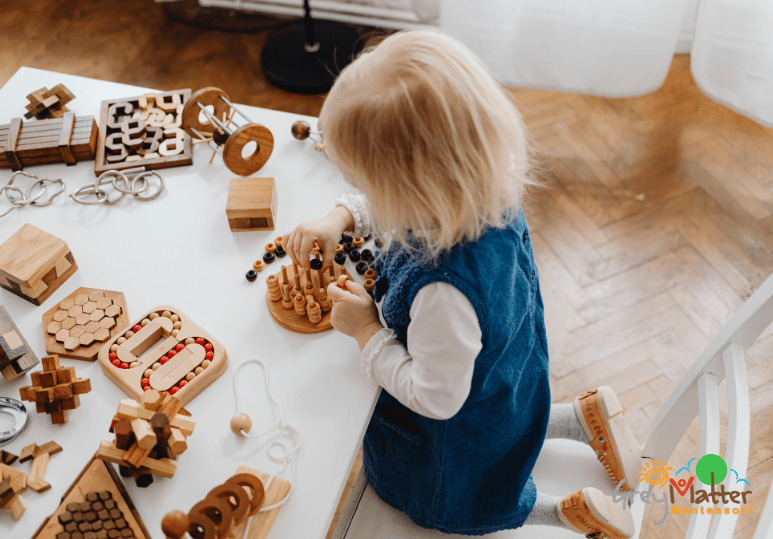
Montessori education places a strong emphasis on hands-on learning experiences that allow children to engage directly with educational materials. Interactive learning can help children better understand concepts while supporting cognitive, physical, and social development during early childhood.
Montessori classrooms often include activities focused on:
- Early literacy and numeracy
- Practical life skills
- Sensory exploration
- Fine motor development
- Communication and language skills
- Problem-solving and critical thinking
Children learn through movement, exploration, and repetition rather than passive observation alone. Many Montessori materials are self-correcting, allowing children to recognize mistakes independently and continue practicing skills at their own pace.
Hands-on learning may also help improve concentration and attention span because children are actively engaged in the learning process. This learning style often encourages children to remain curious, motivated, and interested in classroom activities throughout the day.
Parents frequently value learning environments that promote both academic readiness and practical life skills while encouraging children to develop responsibility and independence naturally.
SOCIAL AND EMOTIONAL DEVELOPMENT GROWTH
In addition to academics, many parents choose Montessori education because of its strong focus on social and emotional development. Montessori classrooms are designed to create calm, respectful, and supportive learning environments where children can build communication and interpersonal skills alongside academic growth.
Montessori programs often support social and emotional development through:
- Collaborative classroom activities
- Respectful communication
- Mixed-age classroom interactions
- Independent problem solving
- Structured classroom routines
- Opportunities for leadership and mentorship
Mixed-age classrooms allow younger children to learn from older peers while older students develop confidence and leadership abilities by helping others. These interactions may help children strengthen empathy, patience, cooperation, and teamwork skills over time.
Montessori educators also encourage children to solve problems calmly and respectfully while building emotional awareness and self-regulation skills. Structured yet flexible classroom environments can help children feel secure while still allowing room for independence and exploration.
Many parents are drawn to Montessori education because it focuses on developing the whole child rather than concentrating only on academic performance. Supporting emotional confidence, communication abilities, independence, and curiosity during the early years may help children build positive learning habits that continue throughout life.
Families exploring Montessori programs often value learning environments that support academic achievement while also encouraging confidence, independence, creativity, and social development during important stages of childhood growth.
FAQs
Q: WHY DO PARENTS CHOOSE MONTESSORI EDUCATION?
A: Many parents choose Montessori education because it supports independence, hands-on learning, creativity, and individualized development. Montessori classrooms encourage children to learn at their own pace while building confidence, problem-solving skills, and social abilities within supportive learning environments.
Q: HOW DOES MONTESSORI EDUCATION DIFFER FROM TRADITIONAL CLASSROOMS?
A: Montessori education focuses on child-led learning, interactive materials, and individualized pacing rather than standardized instruction for all students at the same time. Children are encouraged to explore activities independently while educators provide guidance and support throughout the learning process.
Q: DOES MONTESSORI EDUCATION SUPPORT SOCIAL DEVELOPMENT?
A: Yes. Montessori classrooms often encourage collaboration, respectful communication, teamwork, and mixed-age peer interactions. These classroom experiences may help children develop empathy, leadership abilities, emotional awareness, and stronger communication skills during early childhood development.