
A CALM AND WELCOMING START TO THE MORNING
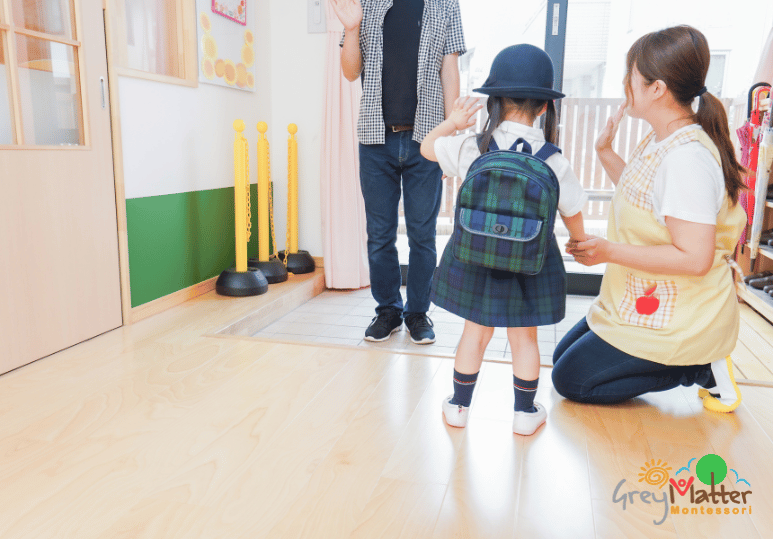
The day begins with something many traditional classrooms overlook: a genuinely calm, unhurried arrival. Rather than a rushed drop-off followed by an abrupt transition into group instruction, a Montessori morning eases children into their environment at a gentle pace. Children are greeted individually, often by name, and given a moment to settle in before diving into their day.
This unhurried start matters more than it might seem. Young children often carry a bit of morning anxiety, whether from leaving a parent or simply adjusting to a new environment. A calm, predictable beginning helps children regulate their emotions and arrive mentally ready to engage, rather than starting the day already feeling rushed or unsettled.
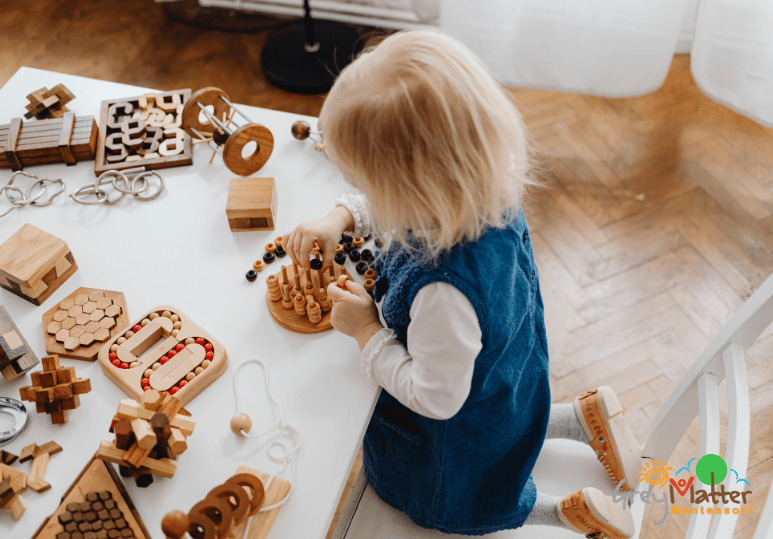
Once settled, children are free to choose their first activity from the materials available in the classroom. This might mean practical life work like pouring or buttoning, a sensory activity, or an early math or language material. The choice itself is part of the learning, as children begin practising decision-making and independence within the very first minutes of their day.
THE WORK CYCLE: THE HEART OF THE MONTESSORI DAY
The centrepiece of any Montessori preschool Calgary classroom is what educators call the work cycle, an extended, uninterrupted block of time where children choose activities and work through them at their own pace. This period typically lasts a few hours and forms the core of the entire morning.
During the work cycle, a child's day might include:
- Practical life activities like pouring, spooning, or dressing frames
- Sensory materials that build focus and fine motor skills
- Early math work using hands-on counting and pattern materials
- Language activities, including phonics sounds and early writing practice
- Cultural exploration through geography, science, or art materials
What makes this period so powerful is the freedom within it. A child is not told to move to the next activity on a fixed schedule. Instead, they are encouraged to work with a material for as long as their interest holds, developing deep concentration in the process. A child who spends thirty minutes carefully pouring water between containers is not wasting time. They are building focus, coordination, and a genuine sense of mastery.
Throughout this period, educators move quietly through the room, observing each child and offering guidance only when it is needed. Rather than directing every moment, they support each child's natural curiosity, stepping in with a new lesson when a child seems ready for the next challenge.
COMMUNITY, MOVEMENT, AND OUTDOOR TIME
A Montessori day is not spent entirely at a table. Movement and social connection are treated as essential parts of healthy development, not distractions from learning. After the concentrated work cycle, children typically transition into outdoor play, physical movement, or group activities that build a different set of skills.
Outdoor time gives children the chance to run, climb, and explore in ways that support gross motor development and simply let out some energy after a period of focused work. It also offers a natural setting for social interaction, as children navigate games, share equipment, and build friendships through unstructured play.
Group activities, such as a shared song, story, or discussion circle, offer another important piece of the day. These moments build a sense of classroom community and give children practice with skills like listening, taking turns, and contributing to a group. Even here, the Montessori emphasis on respect for the individual child remains present, with educators inviting participation rather than demanding it.
Meals and snack time follow a similar philosophy. Children are often involved in preparing or serving their own food, practising independence and fine motor skills in a completely natural, low-pressure setting. What might look like a simple snack break is, in a Montessori classroom, another quiet opportunity for growth.
A DAY THAT BUILDS TOWARD SOMETHING BIGGER
By the time a Montessori day comes to a close, a child has moved through hours of purposeful activity, much of it self-directed, all of it intentional. There is no single moment that looks dramatic from the outside. Instead, the value comes from the accumulation of small, consistent experiences repeated day after day.
Over time, this rhythm builds real skills that extend well beyond the classroom. Children grow more comfortable with independence, more confident in their own decision-making, and more attuned to the needs of the people around them. These are not abstract goals. They are the natural result of a day structured around respect for the child's pace, interests, and capabilities.
For parents picturing what a typical day might feel like for their own child, the best way to truly understand it is to see it in person. Photos and descriptions can only convey so much, but observing a classroom in action, watching children move purposefully from one activity to the next, often makes the philosophy click in a way that words alone cannot. A day in a Montessori preschool Calgary classroom is calm, purposeful, and full of quiet moments of real growth. From an unhurried morning arrival through a focused work cycle and on to outdoor play and community time, every part of the day is designed to build independence, focus, and confidence. It is a rhythm that may look simple from the outside, but it lays a foundation that shapes how children learn and grow for years to come. If you would like to see this daily experience firsthand, Grey Matter Montessori would love to welcome you for a visit. Contact us today to book a tour and picture your child's day with us.
FAQS
Q: How long is a typical Montessori preschool day?
A: Most Montessori preschool days run similarly to traditional programs, often spanning a half day or full day depending on the family's needs. The key difference lies not in the length of the day, but in how that time is structured around child-led exploration and uninterrupted work periods.
Q: Do children get individual attention during the work cycle?
A: Yes. Educators move throughout the classroom during the work cycle, observing each child and offering guidance or new lessons as needed. Because children are working independently rather than following a single group lesson, teachers are able to give more focused, individualized attention throughout the day.
Q: Is there any structure, or is the day completely free choice?
A: There is a thoughtful balance of both. Children have significant freedom to choose their activities during the work cycle, but the day also includes consistent routines, transitions, and group moments that provide the structure young children need to feel secure and confident.