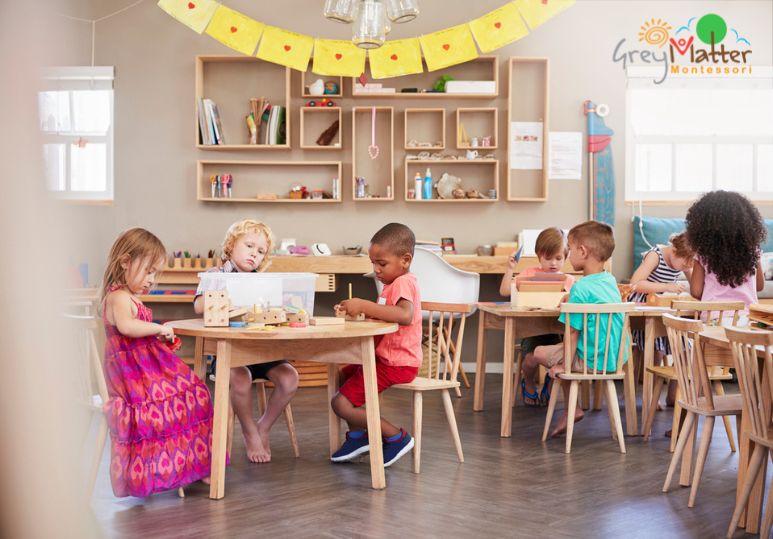
WHAT IS THE BEST AGE TO BEGIN PRESCHOOL?
Most children begin Montessori preschool at approximately three years old. At this stage, many children are becoming more independent, curious, communicative, and interested in completing tasks on their own. However, age is only one factor parents should consider when deciding whether their child is ready for preschool.
Montessori education focuses on each child’s stage of development instead of expecting every student to learn the same skills at the same time. Children do not need to know their letters, numbers, colours, or shapes before they begin. The classroom introduces these concepts through hands-on materials, repetition, observation, and guidance from trained educators.
Children between three and six years old are often especially responsive to routines, language development, movement, sensory exploration, and practical tasks. A Montessori classroom uses this important stage to introduce activities that strengthen concentration, coordination, confidence, and independence.
Starting preschool around age three can help children become comfortable with structured learning before kindergarten. They practise following classroom routines, caring for materials, listening to instructions, completing age-appropriate tasks, and interacting respectfully with others.
Grey Matter Montessori’s NW Calgary preschool is primarily designed for children between three and six years old. A child may be able to start as early as two years and ten months with approval from the school’s directors, provided the child turns three by November of that school year. Children registered in the NW preschool program must also be fully potty-trained.
Grey Matter Montessori’s NE Calgary location provides full-day Montessori programming for children from 19 months to six years old. Because program ages and requirements differ between locations, parents should contact the school to determine which option is appropriate for their child.
Starting early can be beneficial, but families should not feel pressured to enrol their child before they are ready. Some children adjust easily before turning three, while others need more time to become comfortable with separation, communication, or routines. The best starting age is the one that matches the child’s development and the requirements of the chosen program.
SIGNS YOUR CHILD IS READY FOR PRESCHOOL
Preschool readiness is not determined by one ability. Parents should consider their child’s communication, independence, emotional development, and response to unfamiliar environments. A child does not need to perform every task independently, but showing interest in trying is a positive sign.
Children may be ready for Montessori preschool if they can communicate basic needs, understand simple directions, and participate in short routines. They may also show curiosity about other children, new activities, or everyday household tasks.
Common signs of preschool readiness include:
- Showing interest in playing or working near other children
- Following simple one-step or two-step directions
- Communicating basic needs to an adult
- Spending short periods away from a parent or caregiver
- Attempting simple tasks without immediate assistance
- Participating in routines such as getting dressed or cleaning up
- Concentrating on an activity for a short period
- Moving safely through a classroom or play area
- Demonstrating curiosity about new materials and activities
- Beginning to manage frustration with adult support
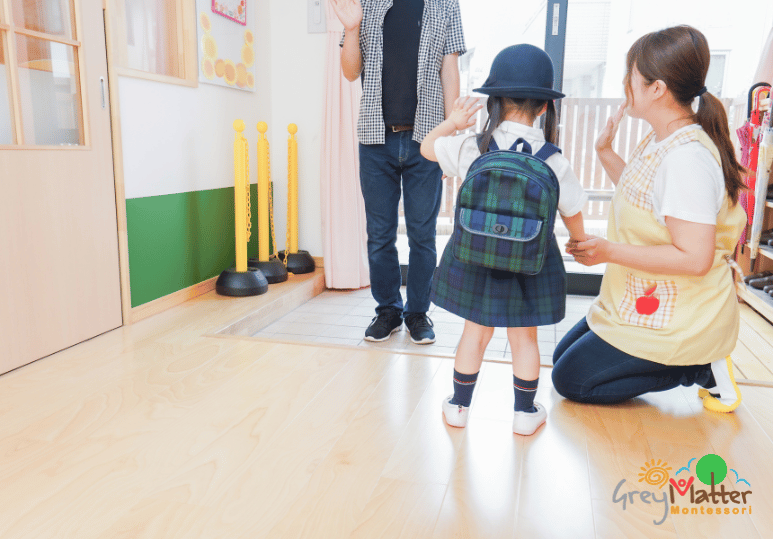
Separation is a common concern for families. A child may cry or feel uncertain during the first few drop-offs and still be ready for preschool. Readiness does not mean a child will never experience anxiety. It means the child can gradually build comfort with the classroom, educators, and daily routine.
Parents can make the transition easier by talking positively about school and establishing predictable morning habits. Visiting the classroom before the first day can also help the environment feel more familiar. Children may benefit from practising simple routines at home, such as putting away toys, carrying a small backpack, washing their hands, or choosing between two appropriate activities.
Potty training is another practical consideration. The NW Calgary preschool requires registered children to be fully potty-trained. Parents should confirm the specific expectations before registration, especially if their child is close to the minimum age.
Parents should also think about the type of schedule their child can manage. Grey Matter Montessori’s NW program offers three-hour sessions with attendance options during the week. The NE location provides a full-day program. A shorter session may suit a child who is new to group learning, while full-day care may better match another family’s routine and childcare needs.
A school tour can give parents a clearer understanding of the classroom and expectations. It also provides an opportunity to discuss the child’s personality, previous care experiences, communication skills, independence, and possible areas where support may be needed.
WHAT WILL CHILDREN LEARN IN MONTESSORI
Montessori preschool helps children build academic, practical, social, and emotional skills through purposeful activities. The classroom is organized so children can access materials, make appropriate choices, and complete tasks with increasing independence.
The five main areas of Montessori learning include:
- Practical life
- Sensorial learning
- Mathematics
- Language
- Culture and science
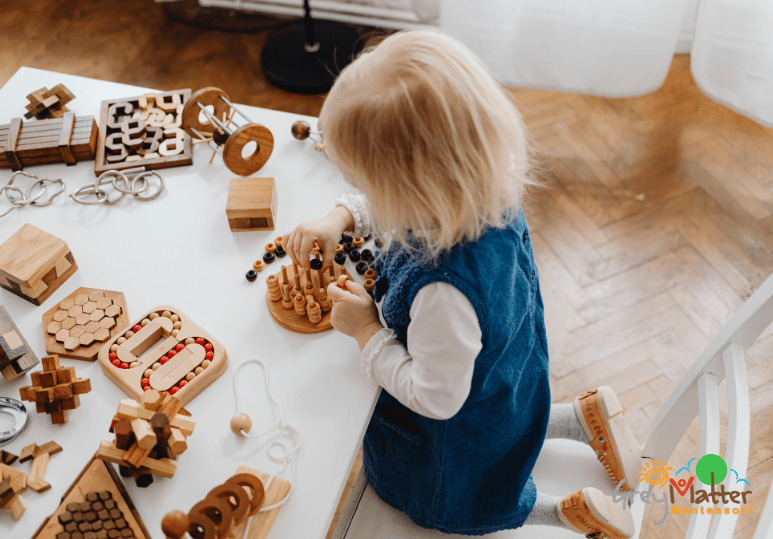
Practical life activities are particularly valuable for younger preschool students. Tasks such as transferring objects, opening containers, arranging materials, or cleaning a workspace may appear simple, but they strengthen coordination, concentration, order, and responsibility. They also give children meaningful opportunities to complete tasks without unnecessary adult intervention.
Montessori students are generally given choices within a structured environment. Teachers introduce materials and demonstrate how to use them. Children can then practise the activity, repeat it, and develop confidence. This balance between choice and structure allows children to explore their interests while learning how to respect classroom expectations.
Mixed-age learning can also support development. Younger children observe more experienced classmates, while older children reinforce their knowledge by modelling routines and responsible behaviour. Children can progress according to their abilities instead of being limited to activities associated with a single age.
Social development happens throughout the day. Children practise sharing space, waiting for materials, communicating respectfully, solving small disagreements, and caring for their classroom. Although Montessori activities often involve individual work, children remain part of a community where cooperation and consideration are important.
Grey Matter Montessori combines Montessori education with the International Preschool Curriculum. Students are introduced to learning experiences that support language, mathematics, science, culture, practical life, sensory development, creativity, and physical movement. Community-based enrichment opportunities may also help children explore new interests and develop confidence.
Beginning Montessori preschool at the right age can give children time to become familiar with classroom expectations before kindergarten. They can strengthen independence, communication, concentration, and early academic skills in an environment that respects individual development.
Parents do not need to determine readiness alone. Speaking with the school can help families understand the available programs and decide whether their child would benefit from starting now or waiting a little longer. Grey Matter Montessori welcomes children at different stages through its NW and NE Calgary programs. Parents can schedule a tour or contact the school to discuss their child’s age, readiness, and registration options.
FAQ's
Q: WHAT IF MY CHILD IS NOT FULLY POTTY-TRAINED?
A: The NW preschool requires children to be fully potty-trained. The NE location offers a full-day program for children starting at 19 months.
Q: IS AGE THREE TOO EARLY FOR MONTESSORI PRESCHOOL?
A: No. Many children begin at age three. Curiosity, communication, independence, and comfort away from caregivers are helpful signs of readiness.
Q: CAN MY CHILD START DURING THE SCHOOL YEAR?
A: Possibly. Mid-year enrolment depends on available space. Contact Grey Matter Montessori for current openings and start dates.